When planning a home interior, one of the most important decisions is choosing the right material for your furniture and cabinetry. The material used inside your kitchen cabinets, wardrobes, TV units, beds and storage units affects how strong, durable and practical the final interior will be.
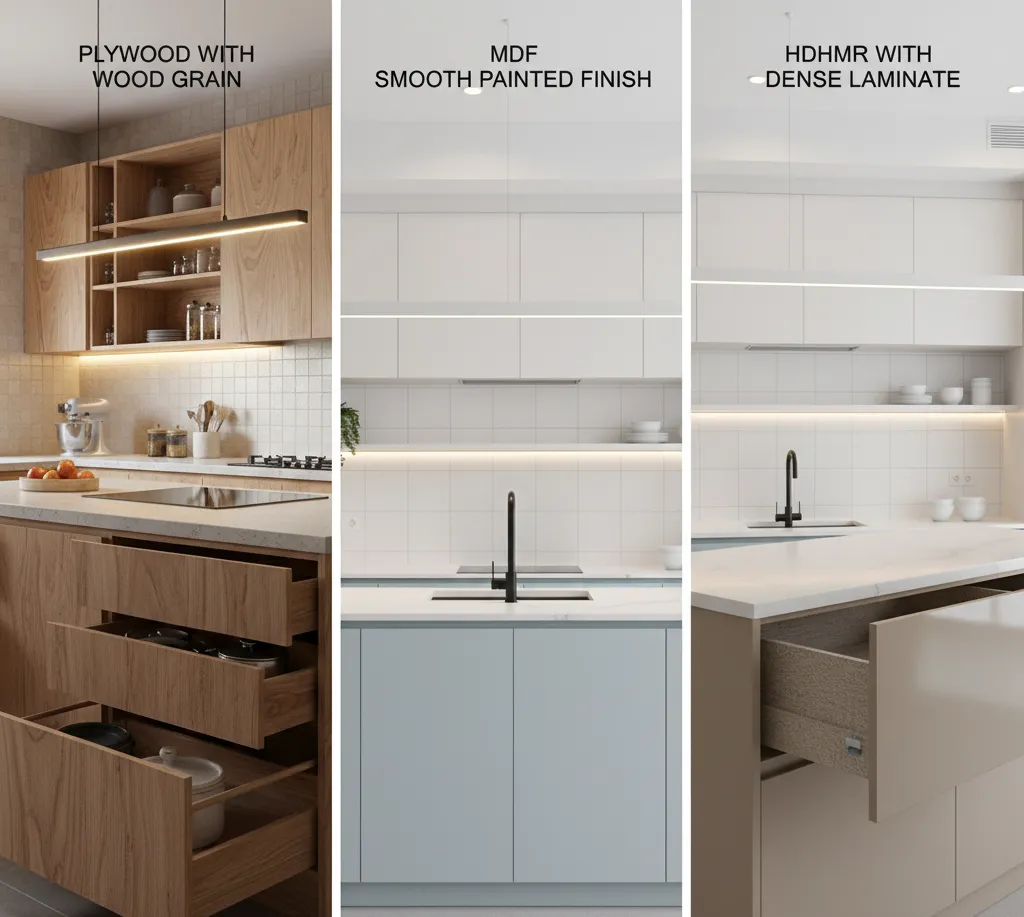
Three materials are commonly discussed for modern interiors: Plywood, MDF and HDHMR. Each has different properties, advantages, limitations and price points.
Plywood is known for its strength and versatility. MDF is popular for its smooth surface and cost-effective finish. HDHMR is a dense engineered board that is increasingly used for interior furniture and cabinetry.
But which one is actually best for your home?
The answer is not the same for every room. Your choice should depend on the location, expected usage, moisture exposure, design, finish, budget and the quality of construction.
“A beautiful interior starts with good design, but a durable interior starts with the right materials.”
In this guide, we will compare plywood, MDF and HDHMR in simple terms so you can make a more informed decision before starting your home interior project.
Plywood vs MDF vs HDHMR: Why Choosing the Right Material Matters
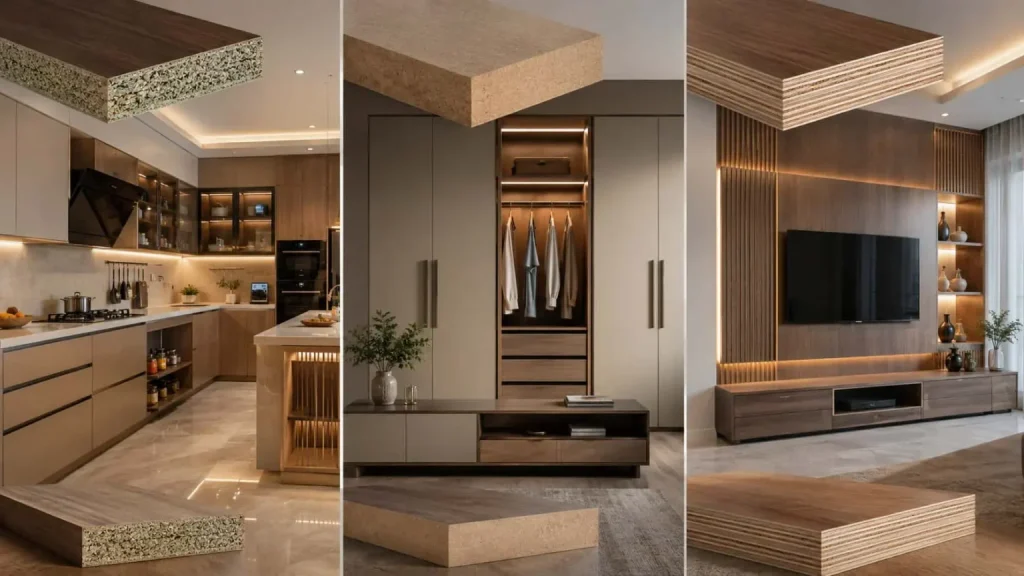
Interior furniture may look beautiful from the outside, but much of its long-term performance depends on what is underneath the finish.
A wardrobe may have a premium laminate, but if the board and construction are not suitable for its use, problems can appear later. Similarly, a kitchen may look excellent in photographs, but daily cooking creates a demanding environment with heat, moisture, spills and heavy usage.
This is why material selection should happen before choosing only the colour or finish.
The right material can provide better strength, better screw holding, improved durability and greater confidence in everyday use. The wrong material may increase the chances of swelling, bending, damaged edges or loose fittings depending on the application and environment.
Another important point is that there is no single board that is automatically the best for every part of a home.
For example, the material you choose for a kitchen carcass may not be the same material you choose for a decorative wall panel. A wardrobe may have different requirements from a bathroom vanity.
Therefore, instead of asking, “Which material is the best?” a better question is:
“Which material is best for this particular application?”
That approach helps you balance quality, appearance and budget.
2. What Is Plywood? Understanding Its Strength and Uses
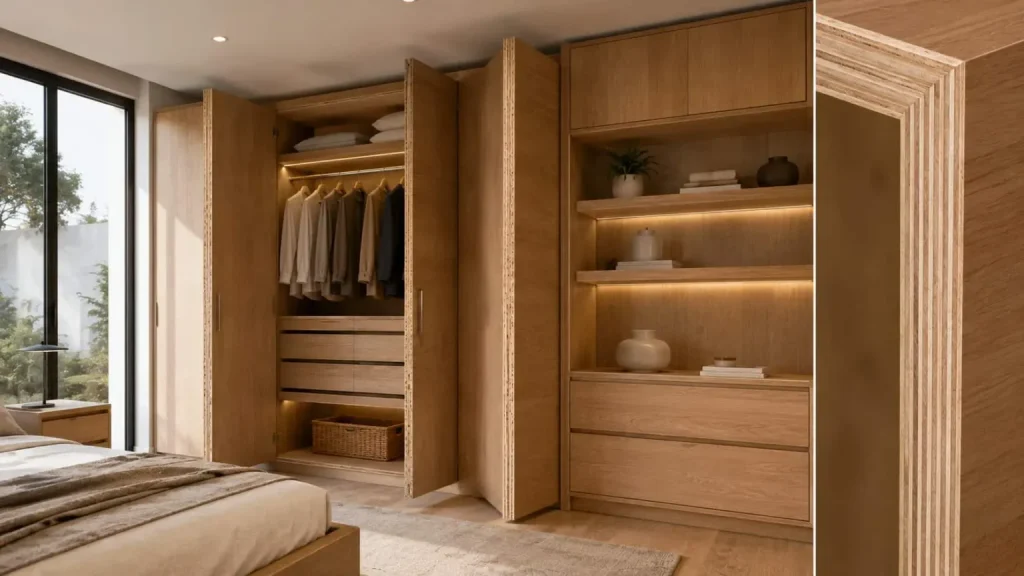
Plywood is an engineered wood product made by bonding multiple thin layers of wood veneer together. The layers are generally arranged with their wood grain directions alternating, which gives plywood good structural strength and stability.
Because of its construction, plywood is widely used in furniture and interior applications where strength is important.
One of its major advantages is versatility. Depending on its grade and quality, plywood can be selected for different environments and applications.
In home interiors, plywood is commonly used for kitchen cabinets, wardrobes, beds, storage units, office furniture, shelves and other furniture structures.
Different plywood grades are designed for different levels of moisture exposure. MR, BWR and BWP are terms you may hear while discussing plywood. However, homeowners should not select plywood only because of a grade name. Actual product quality, manufacturing standards and the intended application should also be considered.
Plywood can also accept different finishes, including laminates, veneers and paints.
Its main disadvantage is usually its higher cost compared with some other engineered boards. However, where structural strength and durability are important, plywood can be a strong choice.
For a home interior, the goal should be to select a suitable plywood quality rather than simply choosing the most expensive option.
3. What Is MDF? A Smooth and Budget-Friendly Interior Material
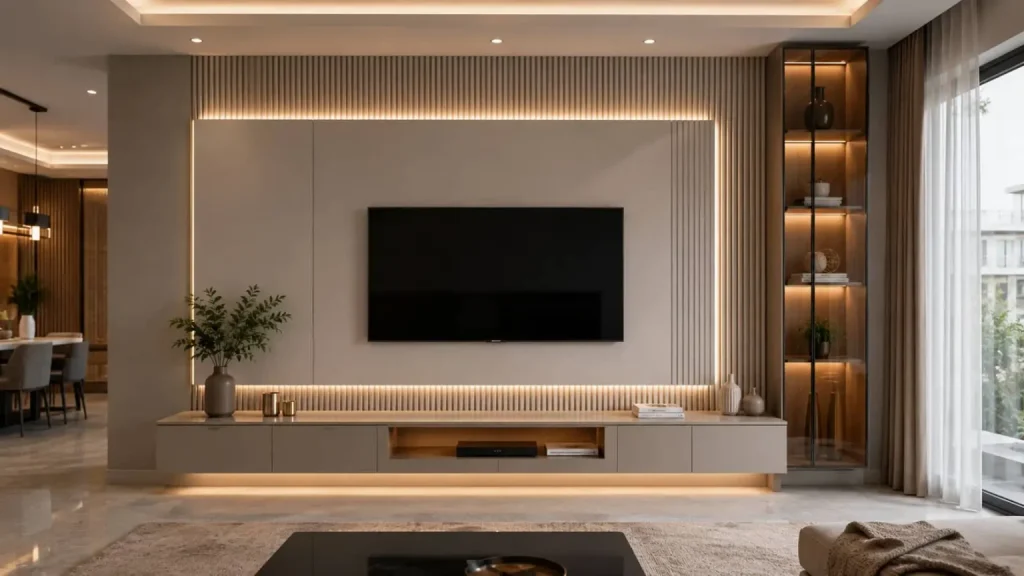
MDF stands for Medium Density Fibreboard. It is an engineered wood board made from refined wood fibres that are combined with resins and compressed under controlled conditions.
Unlike plywood, MDF does not have visible layers or wood grain patterns. Its uniform structure gives it a smooth and consistent surface.
This smooth surface is one of MDF’s biggest advantages. It can work particularly well when the furniture design requires painting, routing, grooves or other decorative detailing.
MDF is commonly used for decorative panels, furniture components, wall panels, shutters and other interior applications where a smooth finish is important.
It can also be more economical than good-quality plywood, making it attractive for homeowners working with a controlled budget.
However, MDF should not automatically be treated as a replacement for plywood in every situation. Its performance depends on the specific product and where it is being used.
Standard MDF is generally more sensitive to moisture than moisture-resistant engineered boards or appropriately selected plywood. Therefore, areas exposed to regular moisture need careful material selection.
MDF can be an excellent option when the design prioritises a smooth finish, decorative work and controlled cost.
The key is using the right MDF product for the right application.
4. What Is HDHMR? The Modern Board for Interior Design
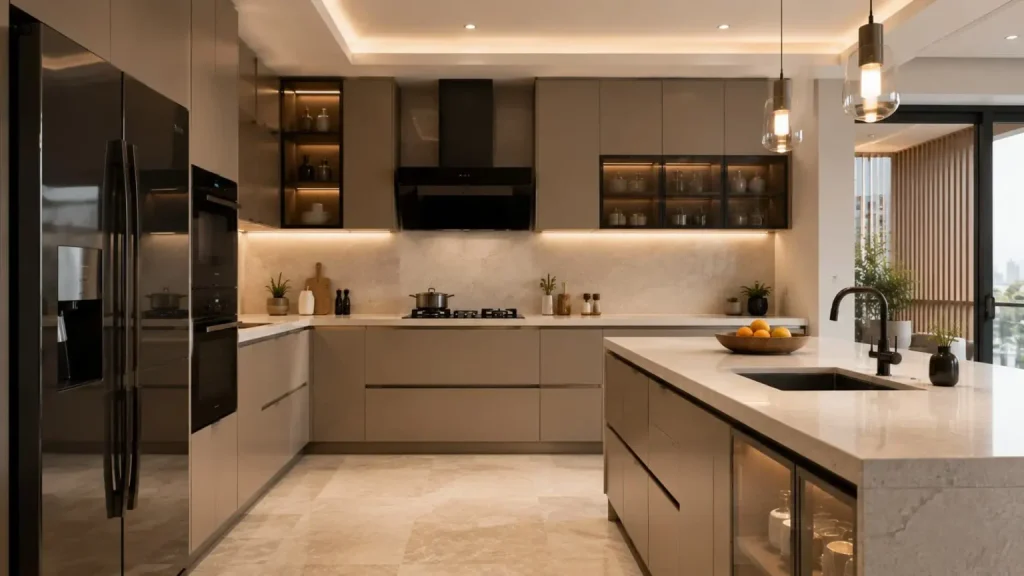
HDHMR stands for High Density High Moisture Resistance board. It is an engineered wood-based board designed with higher density and improved moisture resistance compared with many conventional interior boards.
HDHMR has become increasingly popular in modern interior projects because it offers a balance between strength, surface quality and moisture-related performance.
It is commonly considered for kitchen cabinets, wardrobes, storage units, furniture and other interior applications.
One reason designers and homeowners consider HDHMR is its dense construction. It can provide a solid feel and is suitable for applications where a durable engineered board is required.
However, homeowners should avoid thinking of HDHMR as completely waterproof. Moisture resistance does not mean that the material can be exposed to standing water or prolonged uncontrolled moisture without consequences.
The actual performance depends on the product quality, manufacturing process, edge treatment, installation and environmental conditions.
HDHMR can also work with different finishes, including laminates, veneers and paint systems depending on the board and application.
For many modern interiors, it can be a practical middle-ground option between cost and performance.
Before choosing it, ask your interior professional about the exact board specification, thickness, brand, intended use and warranty.
5. Plywood vs MDF vs HDHMR: Complete Comparison
Plywood, MDF and HDHMR each have their own strengths.
Plywood is generally preferred when structural strength, durability and versatility are important. It can be a strong choice for kitchen cabinets, wardrobes, beds and furniture that experiences regular use.
MDF is often preferred for applications where a smooth and consistent surface is valuable. It can be useful for decorative furniture, painted panels, wall features and selected furniture applications.
HDHMR is increasingly used where homeowners want a dense engineered board with good moisture-related performance and a practical balance between quality and cost.
Here is a simple comparison:
| Feature | Plywood | MDF | HDHMR |
|---|---|---|---|
| Strength | High, depending on grade | Moderate | High, depending on product |
| Surface smoothness | Good | Excellent | Very good |
| Moisture performance | Depends on grade | Depends on type | Designed for improved moisture resistance |
| Screw holding | Generally good | Moderate | Generally good |
| Weight | Moderate | Relatively heavy | Relatively dense |
| Decorative detailing | Good | Excellent | Very good |
| Cost | Usually higher | Usually lower | Mid to upper range |
| Common uses | Kitchens, wardrobes, furniture | Panels, furniture, decorative work | Kitchens, wardrobes, furniture |
This comparison is only a starting point. Thickness, quality, manufacturing standards and installation can significantly affect actual performance.
“The name of the material matters, but the quality of the actual board matters even more.”
6. Which Material Is Best for Modular Kitchen Cabinets?
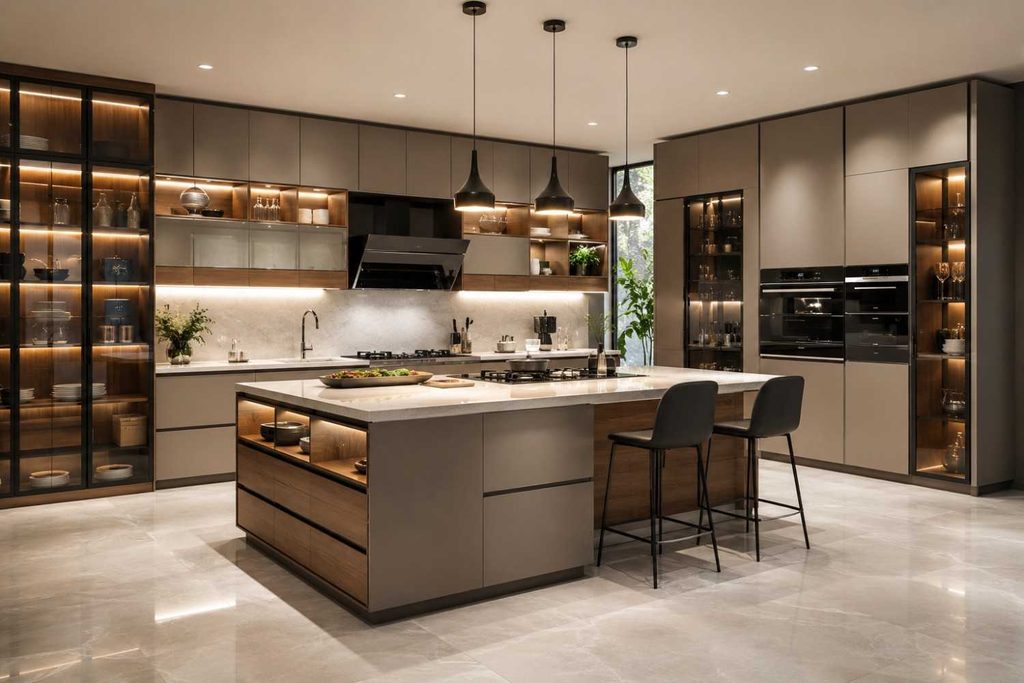
The kitchen is one of the most demanding areas of a home interior.
Indian kitchens can experience heat, steam, cooking oil, spills and frequent cleaning. Cabinets also carry the weight of utensils, groceries, appliances and cookware.
Because of this, material selection should be done carefully.
Plywood can be a strong option for kitchen structures where strength and long-term durability are priorities. A suitable moisture-resistant plywood grade may be considered depending on the kitchen environment.
HDHMR is another option that many interior professionals consider for kitchen cabinetry because of its dense construction and moisture-related performance.
MDF can also be used in selected kitchen applications, particularly for decorative components or shutters, but the exact product and location should be considered carefully.
Another important factor is edge protection. Even a good board needs proper construction and finishing. Exposed edges, poor sealing or water leakage can create problems over time.
Hardware also matters. Hinges, drawer channels and other fittings experience daily stress.
Therefore, the best kitchen material is not simply the most expensive one. It is the material that suits the cabinet location, construction method, moisture exposure and expected usage.
7. Best Material for Wardrobes, Beds and Bedroom Furniture
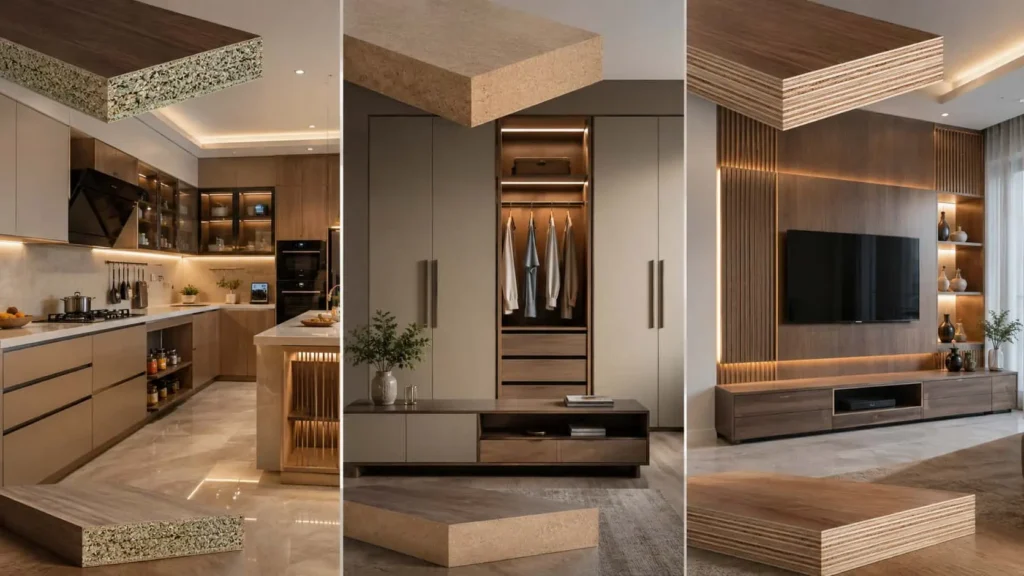
Bedroom furniture generally faces less moisture exposure than kitchen furniture, but it still needs to handle regular daily use.
Wardrobes are opened and closed frequently, shelves carry clothes and accessories, and drawers experience repeated movement.
Plywood is often a dependable choice for wardrobes and structural furniture when strength and durability are important.
HDHMR can also be considered for wardrobes, especially when homeowners want a dense engineered board with a good balance of performance and cost.
MDF can be useful for wardrobe shutters, decorative panels and painted furniture where surface smoothness is important.
For beds, structural strength should be given particular attention. The frame, support system, joints and hardware all matter. Simply choosing an expensive board does not guarantee a strong bed if the construction is poor.
For dressing tables and bedside units, appearance may become equally important. MDF may be useful where a smooth painted finish or decorative profile is desired.
A smart interior design does not necessarily use the same material everywhere. Different materials can be selected for different components based on their purpose.
This can help control the overall budget without compromising the performance of important furniture.
8. Plywood vs MDF vs HDHMR for TV Units, Panels and Wall Furniture
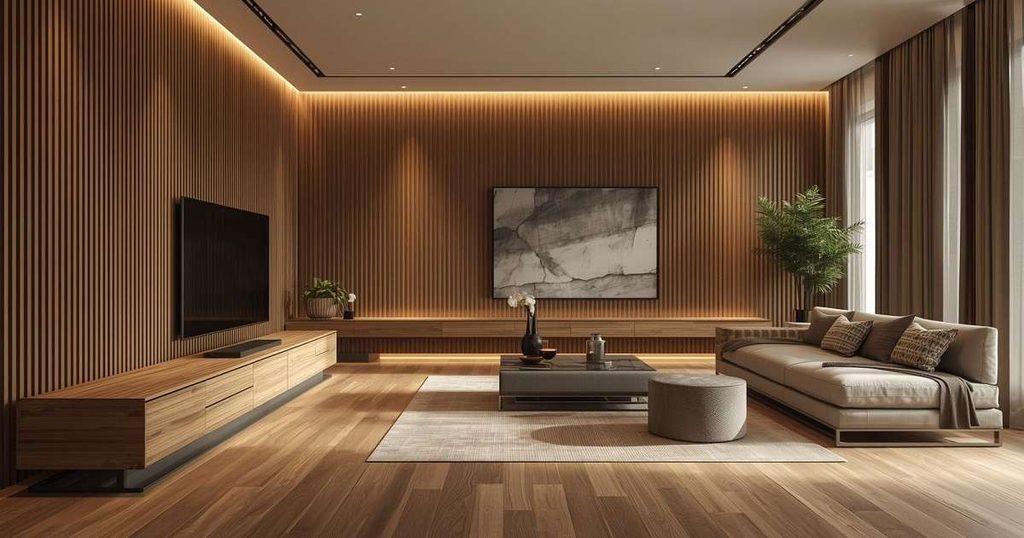
TV units and wall furniture are slightly different from kitchens and wardrobes because appearance often plays a major role.
These areas may include decorative panels, floating shelves, storage cabinets, niches and lighting features.
MDF can be particularly useful for decorative applications because of its smooth surface and suitability for certain painted or routed designs.
HDHMR can also be considered when a denser engineered board is preferred for furniture components.
Plywood works well when structural strength is important, particularly for shelves or furniture components that need to support weight.
Another important consideration is the type of finish.
A simple plywood structure can look completely different after applying a premium laminate or veneer. Similarly, MDF can achieve a high-end appearance with the right paint finish and detailing.
This is why homeowners should separate two decisions:
Board material and surface finish.
The board provides the base construction, while the finish creates much of the visible appearance.
For floating furniture, wall-mounted cabinets and shelves, installation quality is also extremely important. The wall condition, anchors, brackets and load distribution should be checked properly.
A beautiful TV unit should not only look stylish. It should also be stable, practical and easy to maintain.
9. Which Material Handles Moisture, Weight and Daily Use Better?
Different rooms expose furniture to different challenges.
Moisture is a major concern in kitchens, utility areas and bathrooms. Weight is important for kitchen cabinets, wardrobes, bookshelves and storage units. Daily usage matters everywhere.
Plywood can offer good structural performance when the correct grade and quality are selected. Moisture-resistant grades may be appropriate for areas where exposure is expected, but they should not be treated as completely waterproof.
HDHMR is designed with improved moisture resistance and can be considered for several applications where moisture performance is important.
MDF requires more careful selection in moisture-prone areas. Moisture-resistant MDF products are available, but homeowners should confirm the exact specification rather than assuming all MDF products have the same performance.
Construction quality also plays a major role.
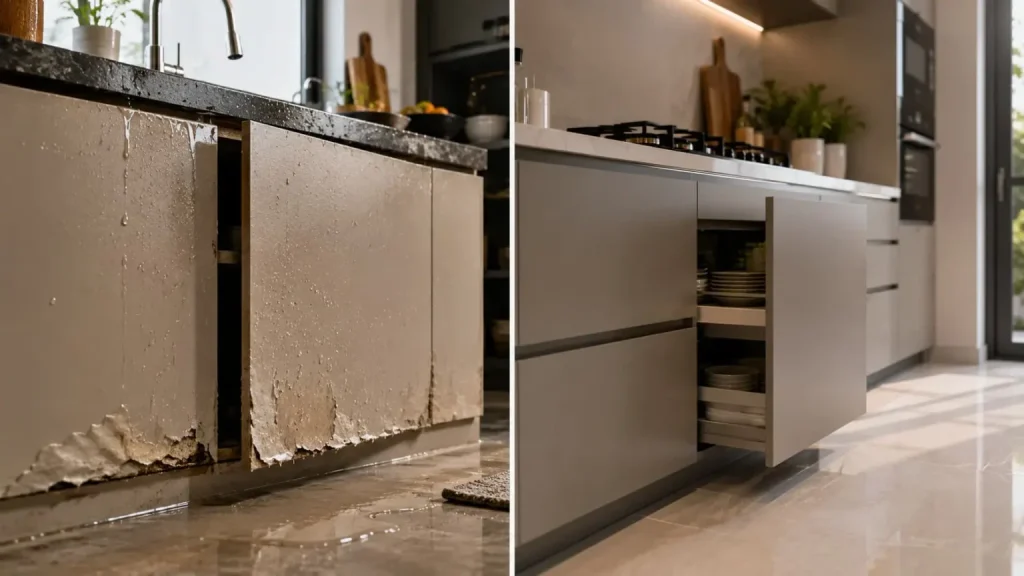
Water entering through an open edge, leaking sink area or poorly sealed joint can cause damage to many types of boards.
Therefore, material selection should always be combined with proper edge treatment, installation and maintenance.
The right approach is to consider the actual environment rather than relying only on labels such as “water resistant” or “premium board.”
10. How Finish and Laminate Change the Look of Interior Furniture
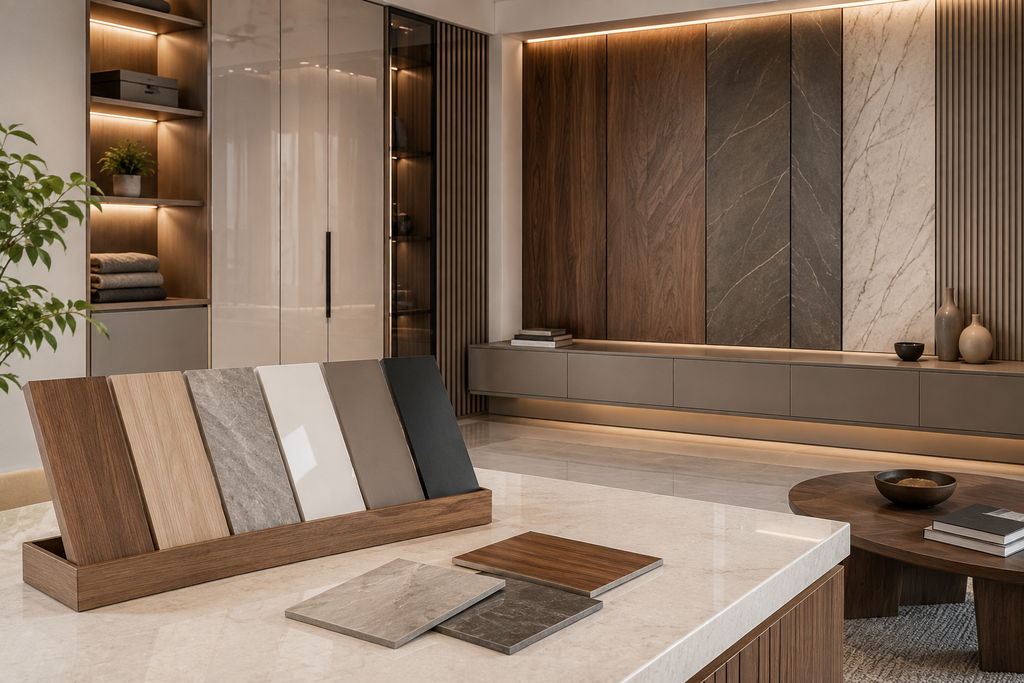
When people compare plywood, MDF and HDHMR, they sometimes forget that the visible appearance usually comes from the finish applied over the board.
Laminate is one of the most commonly used finishes for Indian homes. It is available in many colours, textures and patterns and is generally practical for everyday furniture.
Acrylic finishes can create a smooth, glossy appearance and are often used in modern kitchens and wardrobes.
Veneer gives a more natural wood appearance because it uses a thin layer of real wood over the base material.
PU paint can provide a seamless, premium look and is available in many colours and sheen levels.
Membrane finishes are also used for selected furniture and kitchen shutters.
The choice of finish affects appearance, cleaning requirements, scratch visibility and overall cost.
For example, a matte surface may hide some fingerprints better than a high-gloss surface, while glossy surfaces can make a space feel brighter.
However, finish selection should happen after deciding the appropriate board and construction.
A premium finish cannot compensate for poor internal construction.
The smartest approach is to select the board, thickness, edge treatment, hardware and finish as one complete system.
11. How Much Do Plywood, MDF and HDHMR Cost?
The cost of plywood, MDF and HDHMR varies considerably based on quality, thickness, brand, specifications and market conditions.
Plywood is generally positioned at a higher price level than standard MDF, while HDHMR often falls into a mid-to-premium engineered-board category depending on the product.
But the cost of the board itself is only one part of the final interior cost.
Your final quotation may also include:
- Laminate, acrylic, veneer or paint finish
- Hinges and drawer channels
- Handles or profile systems
- Internal accessories
- Countertop
- Installation
- Transportation
- Electrical work
- Plumbing modifications
- Edge treatment
- Site work
- Design and project management
This is why two kitchens with similar dimensions can have very different prices.
Instead of asking only, “What is the price per square foot?” ask what exactly is included in the quotation.
Check the board specification, thickness, finish, hardware brand, accessories, installation and warranty.
“Two quotations are only comparable when the materials and scope of work are comparable.”
A cheaper quotation may not actually be cheaper if it excludes important items.
The best budget is one that gives you the right quality in areas that receive the most daily use.
12. How to Check the Quality of Plywood, MDF and HDHMR Before Buying

Homeowners do not need to become material experts, but they should know what questions to ask.
Start by asking for the exact board name, thickness and specification. Do not accept vague descriptions such as “premium board” without further information.
For plywood, ask about the grade and intended application.
For MDF and HDHMR, ask whether the product is suitable for the specific environment where it will be installed.
Check the board edges and surface for visible defects. The board should be appropriate for the specified thickness and application.
You should also ask about manufacturer details, product documentation and warranty where applicable.
If the project uses different materials in different areas, make sure the quotation clearly mentions where each material will be used.
For example:
Kitchen carcass: specified board and thickness
Shutters: specified material and finish
Wardrobe: specified board and finish
TV unit: specified material and thickness
This makes the project easier to evaluate.
Also remember that hardware and installation are part of quality. A strong board with poor hinges or weak installation may still create problems.
The goal is not to choose the most expensive product. It is to understand exactly what you are paying for.
13. Common Mistakes People Make When Choosing Interior Materials
One of the biggest mistakes homeowners make is choosing materials only according to price.
A low quotation may look attractive, but if it uses thinner boards, lower-quality hardware or excludes important work, the actual value may be poor.
Another common mistake is assuming that one material should be used throughout the entire home.
Different rooms have different requirements.
A kitchen may need stronger moisture-conscious construction, while a decorative wall panel may prioritise surface finish and design.
Another mistake is confusing waterproofing with moisture resistance. Most interior boards should not be treated as completely waterproof.
Homeowners may also focus heavily on the board while ignoring hardware.
Drawer channels, hinges, lift-up fittings and handles can have a major impact on everyday experience.
Poor measurement is another issue. Even high-quality materials can perform badly if the furniture is poorly designed or installed.
Finally, do not make decisions based only on a small sample. Ask to see the actual material specification and understand how it will be used in your project.
The best interior decisions come from comparing complete systems rather than individual product names.
14. How to Choose the Right Material for Your Home and Budget
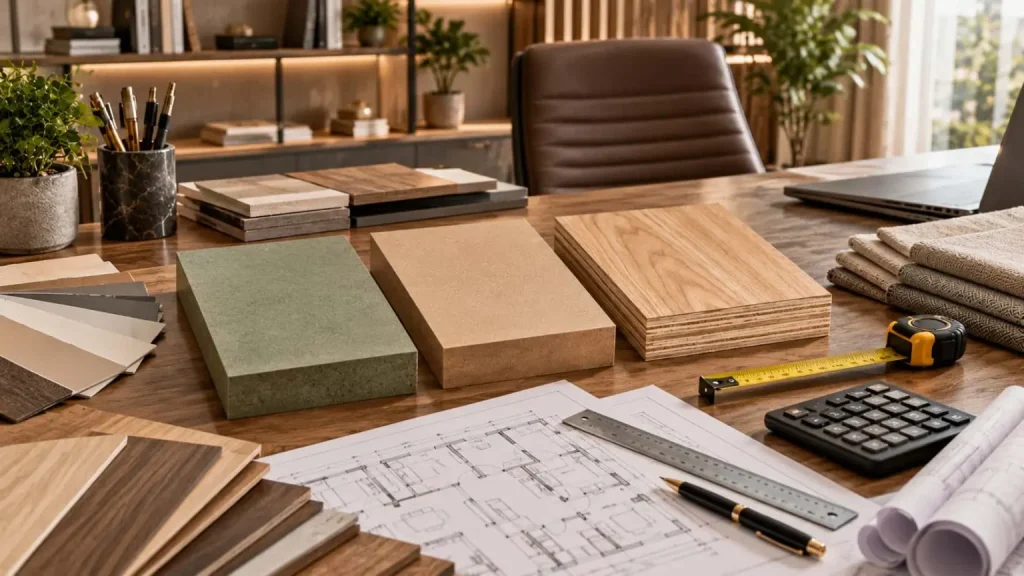
Choosing between plywood, MDF and HDHMR becomes much easier when you divide your home into applications.
For areas where strength and structural durability are major priorities, plywood can be a strong choice.
For decorative panels, painted surfaces and selected furniture applications where a smooth surface is important, MDF may be suitable.
For kitchens, wardrobes and other furniture where a dense engineered board with improved moisture resistance is desired, HDHMR can be considered.
A balanced interior can also combine materials.
For example, you might choose one material for the main kitchen structure and another for decorative shutters or panels. The exact combination should depend on design, usage, budget and professional recommendations.
Your budget should also be divided according to priority.
Spend more where furniture experiences heavy daily use. Save money where the component is mainly decorative and can be upgraded later.
Before finalising the material, ask:
- Where will it be installed?
- How frequently will it be used?
- Is moisture present?
- How much weight will it carry?
- What finish is required?
- What is the expected lifespan?
- What is the available budget?
- What warranty or product documentation is provided?
These questions can lead to a much better decision than simply asking which board is “number one.”
15. Plywood vs MDF vs HDHMR: Final Verdict for Indian Homes
So, which is best: plywood, MDF or HDHMR?
There is no universal winner.
Plywood is a strong and versatile choice for many structural applications where durability and strength are priorities.
MDF is an excellent option for selected applications where a smooth surface, decorative detailing and controlled cost are important.
HDHMR offers a practical engineered-board option for many interior applications where density and improved moisture resistance are desired.
The most important factor is not simply the material name. It is whether the material is appropriate for the location and how well the entire furniture system is designed and constructed.
For an Indian home, think room by room.
Your kitchen, bedroom, living room, bathroom vanity, study room and office furniture may not need exactly the same material.
Also remember that thickness, hardware, edge treatment, finish and installation all affect the final result.
A good interior professional should be able to explain why a particular material has been selected for each part of your home.
“The smartest budget is not the cheapest budget. It is the budget that puts money where performance matters most.”
Before starting your interior project, ask for a detailed material specification rather than accepting a generic quotation. When you understand what is being used, where it is being used and why it has been selected, you can make a much more confident decision.
Final Checklist
Before approving your interior work, confirm:
- Board material and thickness
- Plywood grade where applicable
- Exact MDF or HDHMR specification
- Finish type
- Hardware specification
- Edge treatment
- Moisture-prone areas
- Installation method
- Warranty details
- Complete project quotation
At M27 Interiors, material selection is considered as part of the overall interior planning process. Whether you are planning a modular kitchen, wardrobe, bedroom, living room, study area or complete home interior, the goal should be to balance design, durability, functionality and budget.
A beautiful home should not only look good when it is completed. It should continue to work well for everyday life.