
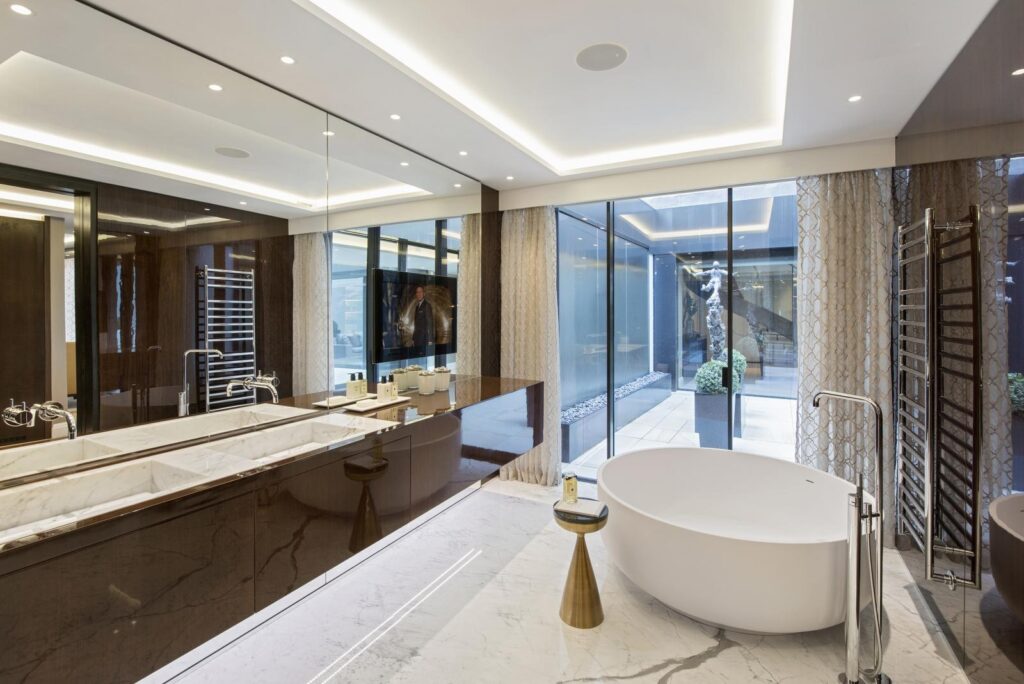
A luxury bathroom is more than an expensive washroom. It is a carefully planned space that combines comfort, privacy, functionality, appearance and everyday convenience. Marble, designer faucets, large mirrors, bathtubs and premium lighting can create a beautiful look, but true luxury comes from how every element works together.
A beautiful vanity should offer useful storage. A large shower should allow comfortable movement. Premium tiles should be supported by proper lighting and skilled installation. A bathtub should be included only when the bathroom has enough space and the homeowner will genuinely use it.
“Luxury is not about putting expensive things everywhere. It is about making everyday moments feel better.”
This guide explains how to design a sophisticated bathroom in an Indian home, including layout, materials, lighting, vanity design, storage, shower planning, colour palettes, budgeting, maintenance and execution.
What Makes a Bathroom Feel Luxurious?
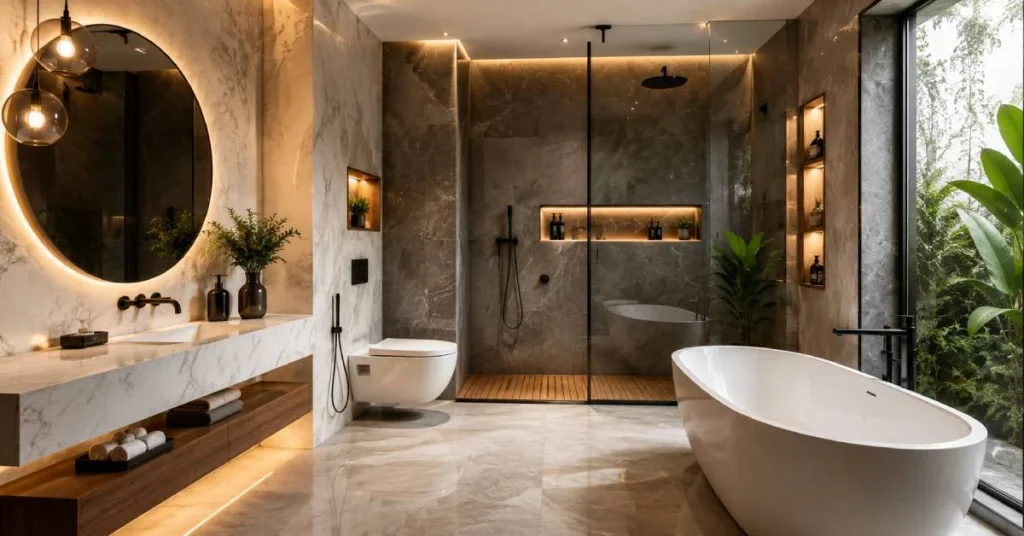
Luxury does not come from one expensive product. A bathroom feels premium when its layout, materials, lighting, fixtures and storage are planned as one complete experience.
Important elements include:
- Comfortable proportions
- Clean lines
- Coordinated materials
- Good lighting
- Quality installation
- Easy movement
- Smart storage
- Consistent hardware
- Minimal clutter
- Thoughtful details
The first thing people may notice is the marble, vanity or mirror, but the overall experience depends on how comfortably the bathroom functions every day.
A luxury bathroom should not feel crowded with furniture or decorative products. It should feel calm, organised and easy to use. Even a compact bathroom can look premium when the design uses visual openness, consistent finishes and practical storage.
“A premium bathroom is designed as one complete experience, not as a collection of expensive products.”
Before selecting tiles or fittings, understand the space, plumbing points, ventilation, door position, window location and daily requirements. Good planning creates a stronger result than simply choosing costly materials.
Plan the Layout and Functional Zones
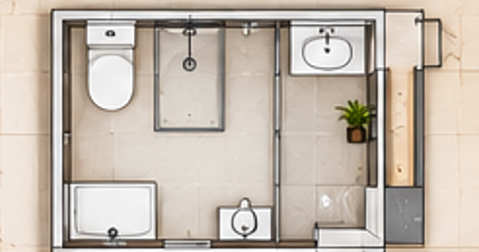
The layout should be comfortable before it becomes decorative. Start by measuring the bathroom and identifying the existing plumbing points, drainage lines, door position, windows and available wall space.
A well-planned bathroom can include separate zones for:
- Vanity and mirror
- Toilet
- Shower
- Bathtub, if suitable
- Storage
- Towel and accessory areas
The vanity should be easy to access without blocking the door or shower. The toilet should have sufficient privacy and movement space. The shower area should be separated from dry zones wherever possible.
In a larger bathroom, a clear glass partition can separate the wet area while keeping the room visually open. In a compact bathroom, a shower curtain or carefully planned glass panel may be more practical.
Do not add a bathtub simply because it looks luxurious. Ask whether it will reduce useful movement space or make cleaning difficult. A spacious shower may provide greater comfort than an oversized tub.
The best layout depends on your lifestyle, family size, frequency of use and maintenance preferences. A master bathroom may justify a larger vanity and separate shower zone, while a common or guest bathroom may need a simpler, durable arrangement.
Design a Statement Vanity and Mirror Wall
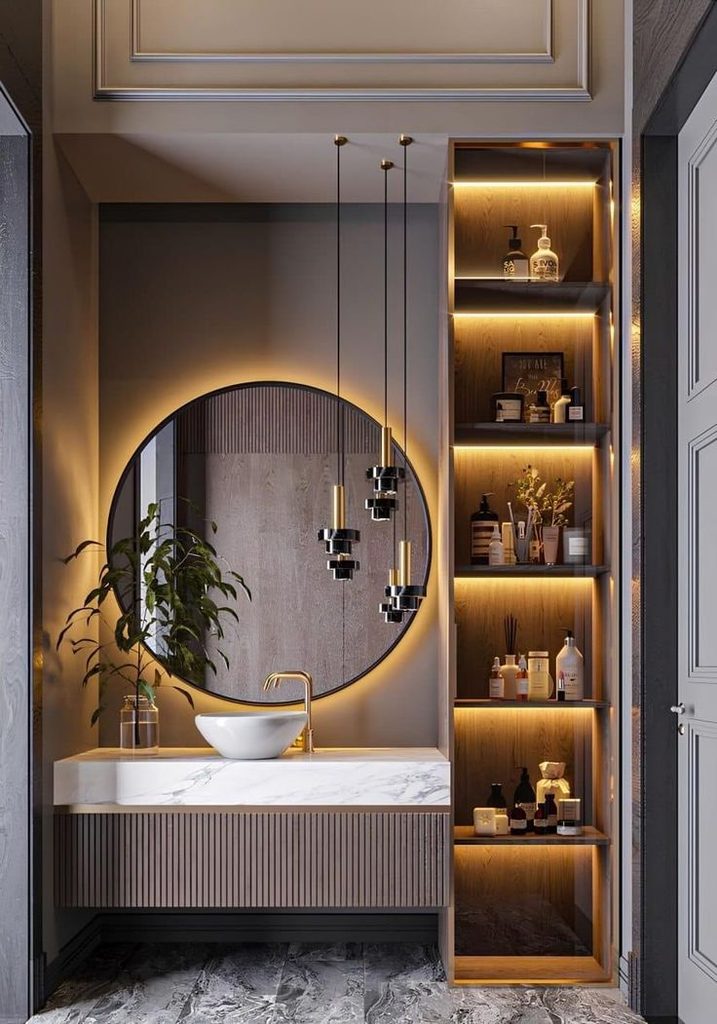
The vanity can become the main visual feature of a luxury bathroom. Instead of treating it as a basic basin cabinet, design the entire wall as a coordinated composition.
A premium vanity may include:
- Floating cabinet
- Stone or quartz countertop
- Integrated or countertop basin
- Large mirror
- Backlighting
- Deep drawers
- Open shelves
- Coordinated handles
Floating vanities can make the floor appear more open and may simplify cleaning below the cabinet. However, the wall must be strong enough to support the unit properly.
The countertop should be selected according to appearance, durability, water exposure and maintenance requirements. Marble, granite, quartz and other suitable engineered surfaces can work well when installed correctly.
A large mirror can make the bathroom feel more spacious by reflecting light and surrounding surfaces. Options include a full-width mirror, backlit mirror, round statement mirror or mirror cabinet with hidden storage.
The mirror should match the proportions of the vanity. A small mirror above a wide vanity may look unbalanced, while an oversized mirror can dominate a compact wall. Keep the countertop visually clean by storing daily products inside drawers or cabinets.
Choose Premium Materials, Tiles and Feature Walls
Luxury materials should be selected strategically rather than used everywhere. Marble is associated with premium interiors, but covering every wall with strong veining can make the bathroom visually heavy and expensive to maintain.
A balanced combination may include:
- Neutral stone-look walls
- Marble feature behind the vanity
- Textured flooring
- Subtle shower tiles
- Coordinated countertop
Large-format tiles can create a cleaner appearance because they reduce visible grout lines. They work well with marble patterns, stone textures, concrete finishes and neutral shades. However, installation quality is essential. Uneven joints, poor alignment or weak finishing can ruin the appearance of expensive tiles.
Marble-look surfaces can offer a similar visual direction with consistent patterns and easier budget control. The objective is not to imitate natural stone unnecessarily, but to choose a surface that suits the design, maintenance needs and budget.
A feature wall can be created behind the vanity, bathtub, shower or toilet. Suitable options include marble texture, fluted finishes, mosaics, large-format tiles and selected decorative panels.
Avoid creating several competing feature walls. One strong focal point usually feels more sophisticated than multiple decorative surfaces.
“A beautiful material cannot hide poor execution forever.”
Create Layered Lighting and Visual Openness
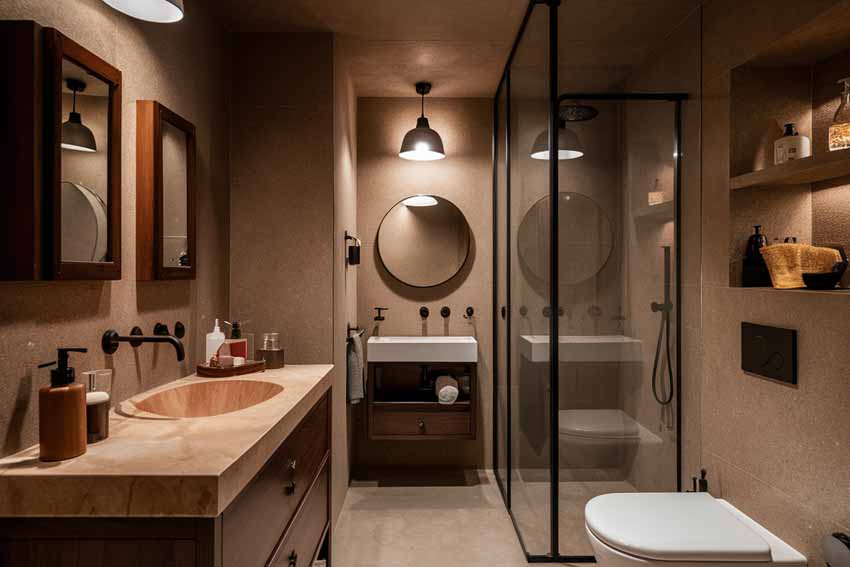
Lighting is one of the most important elements in luxury bathroom design. A single bright ceiling light can make even premium materials look ordinary. Layered lighting creates depth, comfort and better visibility.
Use a combination of:
- General ceiling lighting
- Task lighting near the mirror
- Accent lighting for feature walls
- Niche lighting
- Soft indirect or cove lighting
Backlighting can be used behind mirrors, niches and selected architectural details. The purpose is to create a gentle glow rather than turn the bathroom into a showroom.
Visual openness can also be improved through:
- Large mirrors
- Clear glass partitions
- Consistent flooring
- Light colours
- Large-format tiles
- Hidden storage
- Minimal furniture
A small bathroom does not need to feel cramped. When the floor, walls and fixtures are visually coordinated, the room can appear larger and calmer.
The ceiling should support the overall design. Simple recessed lights, a minimal false ceiling or subtle cove lighting may be enough. If the walls already contain strong marble or stone patterns, a clean ceiling will create better balance.
“Beautiful materials need beautiful lighting to reveal their full potential.”
Select a Sophisticated Colour Palette and Fixture Finish
A luxury bathroom usually benefits from a controlled colour palette. Choose one primary direction and repeat it across tiles, vanity, walls, accessories and metal finishes.
Popular combinations include:
- White and gold for a classic look
- Beige and brown for warmth
- Charcoal and grey for drama
- White and natural wood for a calm contemporary style
- Black and marble for a bold appearance
- Taupe and stone for understated elegance
Fixture finishes should also be coordinated. Matte black can create a modern look with white tiles, grey stone, marble and wood tones. Brushed gold or warm metal can add elegance when used carefully. Chrome remains a timeless option for clean and practical bathrooms.
Use the selected finish across faucets, shower controls, handles, mirror frames and visible accessories. Mixing too many unrelated finishes can make the design look accidental.
Dark colours can create a dramatic luxury bathroom, especially when combined with warm lighting and lighter elements. However, dark surfaces may show water marks and dust more clearly. Maintenance should always be considered before finalising the palette.
Natural luxury does not need to be shiny. Beige stone, warm wood tones, soft lighting and natural textures can create a calm spa-inspired environment.
Design a Comfortable Shower and Bathing Area
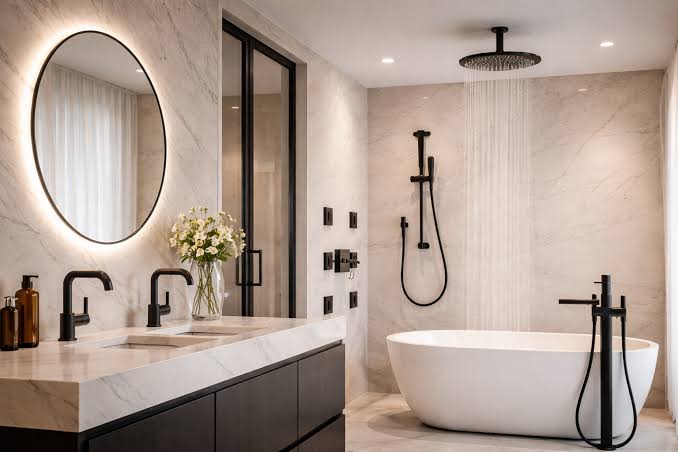
The shower can become the most relaxing part of the bathroom. Depending on the available space and budget, you may consider a rain shower, hand shower, shower niche, glass enclosure, built-in bench and premium controls.
However, luxury is not measured by the number of shower functions. If you will never use multiple modes, investing in them may not improve your daily experience. Choose features according to your lifestyle.
A shower niche is both practical and attractive. It keeps toiletries organised without adding an external rack. It can be finished with matching tile, contrasting tile, stone or integrated lighting. The niche should be planned during construction because adding it later may require unnecessary structural work.
A shower bench can provide comfort in a larger bathroom, but it should not make the shower area feel tight. Proper slope and drainage are essential.
A bathtub can create a hotel-like appearance, but it should be included only when the space, water supply, drainage and cleaning access are suitable. Freestanding, built-in and corner tubs are possible options.
“Luxury is not owning a feature. Luxury is having a feature that genuinely improves your life.”
Plan Storage, Accessories and Clutter Control
Luxury bathrooms generally look organised because everyday products are not left across every surface. Storage should be planned before finalising the vanity, mirror and wall finishes.
Useful storage options include:
- Vanity drawers
- Mirror cabinets
- Tall cabinets
- Shower niches
- Wall-mounted shelves
- Hidden compartments
- Towel storage
A tall cabinet can use vertical wall space for towels, toiletries, cleaning supplies and extra products without taking up a large floor area.
Accessories should improve convenience without creating visual clutter. Consider towel bars, towel rings, soap dispensers, tissue holders, robe hooks, bath mats and trays. Select accessories that coordinate with the fixture finish.
A small amount of greenery can soften the bathroom, but plants should suit the available light and humidity. Do not add plants only because they look attractive in photographs.
Keep selected decorative items visible and store the rest. The vanity countertop should remain easy to clean. A premium bathroom should feel calm, not crowded.
“The fastest way to make a luxury bathroom look ordinary is to cover every surface with clutter.”
Storage is not an optional addition. It is one of the main elements that helps a bathroom remain beautiful after daily use.
Prioritise Waterproofing, Plumbing, Ventilation and Electrical Work
A luxury bathroom still depends on practical engineering. Waterproofing, plumbing, drainage, ventilation and electrical planning should be completed correctly before decorative finishes are installed.
Waterproofing protects the underlying structure from moisture-related damage. It should be planned for floors, shower areas, wall junctions and other vulnerable locations.
Plumbing should be checked before finalising the layout. Poor drainage, incorrect slopes or inaccessible pipes can create long-term problems.
Ventilation is equally important. Consider:
- Windows
- Exhaust fans
- Air circulation
- Moisture control
- Drying time
- Odour management
Electrical planning may be required for mirror lighting, exhaust fans, water heaters, grooming equipment, additional lights and smart features. Wet areas require appropriate safety measures and should be handled by qualified professionals.
Smart features such as sensor lighting, LED mirrors, digital shower controls, heated mirrors and connected exhaust systems can improve convenience, but technology should have a clear purpose.
“Spend on what protects the bathroom before spending on what decorates it.”
Good construction work may not be visible after completion, but it determines how well the bathroom performs over time.
Design for Indian Homes and Different Bathroom Types
Luxury design should remain practical for Indian homes. Consider water quality, humidity, cleaning habits, ventilation, family size, storage requirements and frequency of use.
A master bathroom may justify:
- Premium vanity
- Large mirror
- Better lighting
- Feature wall
- Glass shower enclosure
- Bathtub, if suitable
A common bathroom may prioritise durability, easy maintenance, storage, good lighting and practical fixtures. A guest bathroom can feel welcoming with good tiles, an attractive mirror, compact vanity, quality fittings and proper lighting.
In a 2BHK apartment, premium details can create a luxury appearance without copying a large hotel bathroom. A marble-look vanity wall, backlit mirror, floating vanity, coordinated fixtures and warm lighting may be enough.
A 3BHK may offer more space for a larger vanity, separate shower zone, storage, bench or bathtub. However, additional space should not automatically lead to more furniture. Proportion and movement remain important.
The bathroom should look good on the day it is completed and remain practical years later. Choose materials and features that suit your actual lifestyle rather than following trends blindly.
Create a Spa-Inspired Bathroom Experience
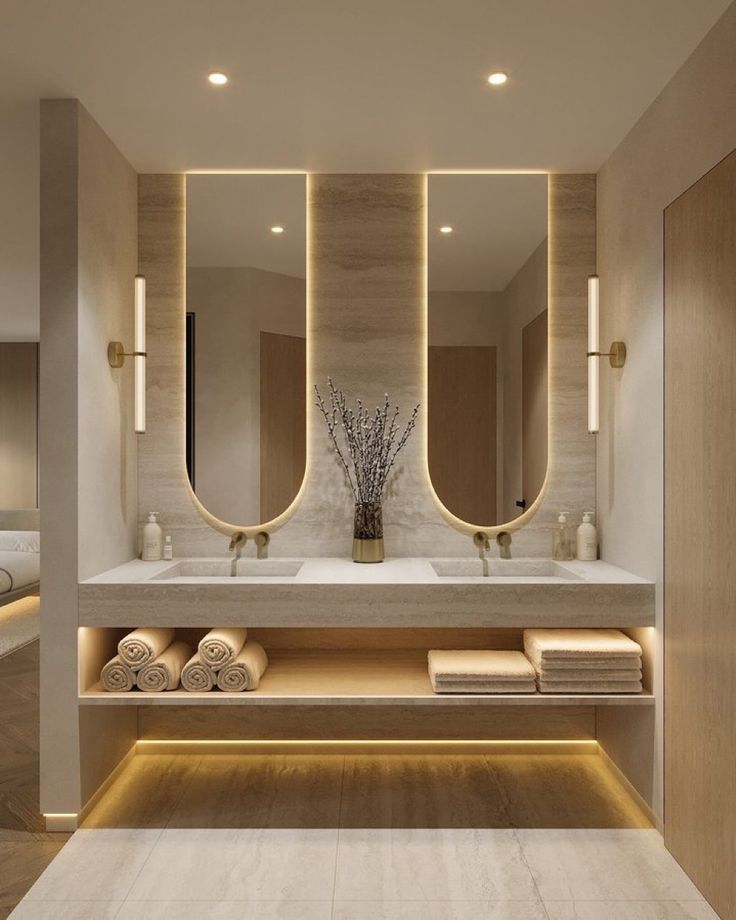
A spa-inspired bathroom focuses on calmness, comfort and sensory experience. It does not need to be filled with expensive products.
You can create this atmosphere through:
- Warm layered lighting
- Natural colours
- Soft towels
- Clean surfaces
- Organised storage
- Comfortable shower
- Minimal decoration
- Natural textures
- Gentle wood tones
- Suitable greenery
A natural luxury bathroom may use beige stone, warm wood, soft lighting and neutral fabrics. A dark luxury bathroom may combine charcoal surfaces, warm lighting, light vanity elements and brushed metal.
The goal is to make the room feel relaxing rather than crowded. Every visible element should support the overall mood.
Comfort also comes from practical details such as easy-to-reach towel storage, a well-positioned mirror, sufficient counter space, good ventilation and a shower that is comfortable to use.
The best spa-inspired bathroom is not necessarily the most decorative one. It is the one that helps you slow down, feel comfortable and complete daily routines without unnecessary inconvenience.
Luxury should be experienced through the senses and through ease of use. Soft lighting, clean lines, pleasant textures and organised surfaces can create a stronger feeling than excessive decoration.
Set a Realistic Budget for a Luxury Bathroom

There is no fixed price for a luxury bathroom because the scope can vary significantly. A broad planning range in India may include:
- Premium bathroom: approximately ₹1.5 lakh to ₹3 lakh or more
- High-end bathroom: approximately ₹3 lakh to ₹5 lakh or more
- Luxury bathroom: approximately ₹5 lakh or more
A large master bathroom with premium finishes, custom vanity, bathtub, advanced shower systems, extensive plumbing changes and specialised materials can cost considerably more.
Actual cost depends on:
- Bathroom size
- Materials
- Brands
- Labour
- Plumbing changes
- Electrical work
- Waterproofing
- Sanitaryware
- Customisation
- Installation quality
A practical budget hierarchy is:
- Construction, waterproofing, plumbing and drainage
- Daily-use fixtures such as toilet, basin and shower
- Comfort elements such as storage, lighting and ventilation
- Appearance elements such as tiles and feature walls
- Extras such as bathtubs, smart technology and decorative accessories
Spend more on waterproofing, plumbing, installation quality, sanitaryware, frequently used fittings, lighting and vanity. Spend carefully on decorative accessories, technology and premium wall treatments.
“The smartest luxury budget does not buy everything. It buys the right things.”
Avoid Common Luxury Bathroom Mistakes
Several mistakes can reduce the quality of an expensive bathroom.
Using Too Many Premium Materials
Combining marble, mosaic, wood, metal and multiple patterns can create visual noise. Select a controlled material palette.
Choosing Too Many Colours
A sophisticated bathroom usually benefits from a limited colour scheme.
Ignoring Lighting
Poor lighting can make premium surfaces look dull or uncomfortable.
Forgetting Storage
Visible toiletries and cleaning products quickly destroy the luxury appearance.
Installing an Oversized Bathtub
A bathtub that reduces movement space is not a luxury.
Ignoring Maintenance
Every material and fixture has cleaning requirements. Choose surfaces you can maintain comfortably.
Copying Hotel Designs
Hotels are designed for different users and maintenance systems. Your home should reflect your lifestyle.
Following Trends Blindly
Choose timeless materials and features that you can enjoy for years.
Accepting Poor Installation
Uneven joints, weak sealing, poor alignment and unfinished edges can ruin expensive products.
Forgetting Ventilation
Moisture, odour and dampness can affect both comfort and durability.
A successful bathroom balances appearance, performance, maintenance and personal preference. The most expensive design is not always the most suitable one.
Maintain the Bathroom and Choose the Right Professional
A beautiful bathroom needs regular care. Clean fixtures regularly to reduce water marks and deposits. Keep the shower area dry and ensure that ventilation is working properly. Clean grout periodically and avoid harsh chemicals unless they are compatible with the surface.
Keep drains clear and inspect seals, joints and silicone areas for early signs of damage. Small maintenance tasks can prevent larger repair costs.
Before hiring a bathroom interior professional, ask:
- What is included in the quotation?
- Which materials and brands are included?
- Are plumbing changes included?
- Is waterproofing included?
- Which sanitaryware and fittings are proposed?
- What vanity material will be used?
- Are lighting points included?
- What is the installation timeline?
- How will changes or defects be handled?
- Is maintenance access planned?
- Are brand specifications clearly mentioned?
A detailed quotation is easier to understand than a single total amount. Confirm the layout, material samples, fixture finishes, lighting points, storage requirements and installation responsibilities before work begins.
A professional should also explain the construction sequence, waterproofing process, testing requirements and handover details. Clear communication reduces confusion and helps protect the budget.
Final Planning Checklist and Conclusion
Before construction begins, confirm the following:
☐ Measure the bathroom
☐ Finalise the layout
☐ Check plumbing and drainage
☐ Plan waterproofing
☐ Select tiles and surfaces
☐ Choose the vanity and basin
☐ Select the toilet and shower
☐ Decide whether a bathtub is necessary
☐ Choose the mirror
☐ Plan layered lighting
☐ Select fixture finishes
☐ Plan storage and accessories
☐ Confirm electrical points
☐ Plan ventilation
☐ Finalise the budget
☐ Review the quotation
☐ Confirm the installation timeline
There is no universal luxury bathroom. For one homeowner, luxury may mean a large bathtub. For another, it may mean a spacious shower, beautiful vanity, excellent storage or a calm, uncluttered room.
The best bathroom is not designed only for photographs. It is designed around the people who use it every day.
A luxury bathroom is created when the layout is comfortable, storage reduces clutter, tiles support the design, lighting creates depth, fixtures coordinate, the shower suits your lifestyle and waterproofing and plumbing are properly executed.
“Luxury is the feeling that everything has been considered.”
At M27 Interiors, bathroom planning can be part of a complete interior project, including modular kitchens, wardrobes, bedrooms, living rooms, furniture, vanity areas, office interiors, commercial interiors and turnkey interior projects.
Planning should begin with understanding your space, lifestyle and budget.
Planning a new bathroom or renovating an existing one?
Share your bathroom measurements or floor plan with M27 Interiors and discuss your requirements, preferred design style and budget.
A luxury bathroom does not start with a bathtub or a marble slab.
It starts with a thoughtful plan.
M27 Interiors | Designed Around Your Life.